
Food Safety Developments in 2026 – New Risk Trends to Watch
A 2025 article from the Food Safety Institute discusses some important food safety regulations: Codex Alimentarius; ISO 22000; HACCP and SQF (Safe Quality Food) certification. While these systems overlap in areas, they have distinct operating venues important to all food operations.
As an example, a consultant seldom writes a food safety plan which only includes a HACCP system; inevitably that plan will include flow charts, hazard worksheets, standard operating procedures, current good manufacturing practices as well as testing, verification and validation procedures beyond audits of monitoring logs. All the systems discussed here overlap and all have distinct differences.
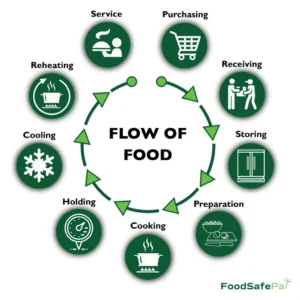
HACCP – ‘Hazard Analysis and Critical Control Points’ – This is a system based on predicting and controlling potential biological, chemical and physical hazards in the flow of food. It has seven steps: hazard analysis; critical control points; critical limits; monitoring; corrective action; verification and validation; and record keeping. In contrast to the other systems discussed here, HACCP plans are requirements for many food service operations and strongly recommended for all.
A common criticism of HACCP plans, however, is that they are paperwork exercises to satisfy regulatory requirements and do not provide detailed measurements of the hazards defined. More current systems, therefore, require more stringent microbiological testing and measurements of hazards as well as follow-up to assure control measures are effective (for example, using ATP – adenosine triphosphate – meters to measure cleanliness and contamination).
Codex Alimentarius – A collection of internationally recognized standards, guidelines and codes of practice related to food safety, production and labeling established by the Food and Agriculture Organization and the World Health Organization.
The primary purpose of Codex standards is protecting consumer health through science-based food safety measures. These standards establish maximum limits for harmful substances like pesticide residues, heavy metals, and mycotoxins in food. They also provide guidelines for controlling foodborne pathogens and ensuring proper food handling practices throughout the supply chain.
One of the most significant aspects of the Codex Alimentarius is its recognition by the World Trade Organization (WTO) as the international reference point for food safety in trade disputes. This means that when countries disagree about food safety requirements affecting international trade, Codex standards often serve as the benchmark for resolving these conflicts.
ISO (International Organization for Standardization) 22000 – this system also has international applications but its standards apply to all types of industries (technology, agriculture manufacturing heath care and others) not merely food safety. The ISO family of standards (there are many) provides universal guidelines for effective safety and environmental impact. It emphasizes HACCP principles also prerequisite programs (PRP) such as employee hygiene and training, as requirements for a successful food management system. In summary, the ISO family of standards has the following components: food safety management system, hazard analysis and critical control points (HACCP); interactive communication; and system management. While these appear similar to other systems, the objective is to apply them on an international basis. Food importers and exporters use ISO 22000 certification to demonstrate food safety compliance across national boundaries.
SQF – (Safe Quality Food) –
While HACCP examines the need for hazard control, SQF evaluates the entire food management system for each facility. SQF goes further than HACCP requiring internal audits, management review and CAPAs (corrective and preventive actions). SQF is a comprehensive food safety and quality management certification program that incorporates HACCP principles but also includes quality management and compliance with regulatory requirements. While HACCP involves self-evaluation or external audits depending on the food service operation, SQF requires third party audits as part of the certification process, SQF is more comprehensive offering three levels of certification based on the type of food operation.
SQF, Codex Alimentarius and ISO 2200 are recommended programs which prepare food wholesalers and manufacturers for expanding their scope of operation (food retailers want to sell wholesale or expand into import-export operations). Both SQF and ISO 22000 provide specialized levels of certification depending on the scope and complexity of the food producer.
In summary SQF, Codex Alimentarius, HACCP and ISO 22000 are all essential for ensuring food safety and quality; they incorporate similar food safety components (all use HACCP components) but differ in their focus. Codex and ISO operate internationally, along with SQF they move beyond HACCP components to emphasize management systems and prerequisite programs.
Sources: (To read more about the four systems)
ISO 22000 https://www.iso.org/iso-22000-food-safety-management.html
SQF https://www.sqfi.com/
CODEX ALIMENTARIUS https://www.fao.org/fao-who-codexalimentarius/en/
HACCP https://www.fda.gov/food/hazard-analysis-critical-control-point-haccp/haccp-principles-application-guidelines